
A Manifesto on Scarcity Mindset, Assumptions and Choosing Abundance
I wrote this manifesto for:

- Photographers who feel inferior when they see others’ success
- Professionals tired of racing to the bottom on pricing
- Anyone who’s received (or been the perpetrator of) cruel – maybe even anonymous – criticism
- Photographers operating from scarcity who want to shift to abundance
- Anyone who’s ever made assumptions about what clients can afford
- People ready to build self-value instead of self-doubt”
- Photographers that are ready to stop underpricing photography work for their clients
As a warning, This manifesto is NOT for:
- Photographers that are comfortable with status quo
- Photographers who think $300 full sessions are sustainable
- Anyone looking for permission to keep undervaluing themselves
- People who want to be validated about their scarcity mindset
This is a manifesto about the things that very few discuss:
When you see another photographer’s success and feel inferior, you’re not reacting to THEM. You’re reacting to your own limiting beliefs.
➜ I’m going to tell you why feeling triggered by others’ success reveals everything about YOUR scarcity mindset, nothing about their achievement.
➜ I’m going to share the cruel email I received twelve hours after my father died – and what it taught me about assumptions, empathy, and fear.
➜ I’m going to show you the science proving that scarcity mindset literally makes you dumber, less empathetic, and worse at business vs someone in abundance mindset thinking.
And I will challenge you to choose differently. I promise this: it probably won’t be comfortable.
But if you’re tired of feeling inferior, tired of competing on price, tired of assumptions (yours and others’), tired of the race to the bottom – this manifesto is for you. Let’s begin.
Are you the scarcity type thinking photographer or abundance type of thinking photographer?
Not sure where you fall on the spectrum? Take our quiz at the end to find out or click here to find out!
Feelings of Inferiority
I saw a comment recently that stopped me, dead, in my tracks. The scene: A Facebook group for professional photographers committed to elevating their businesses. A fellow photographer had just shared her success story.
“I had a moment today that truly made me take a deep breath in and pat myself on the back…I had officially hit $20K+ for my minis during my Holly-days Portrait Sessions. I don’t call them “Mini Sessions” because they are experiences. I love them because it allows my “regular clients” an opportunity to come in without the bigger commitment of a regular session. I was able to achieve one of those days as $11k+!
And I realized that, in this current state of our economy, undoubtedly this has been my most profitable year yet!
A huge part of that success comes from these kind of events, my Holly-days sessions are a boutique (another way of saying “custom photography”) offering. I don’t do more than 14 session spots for a couple of reasons: 1) this is a manageable number for me to handle and 2) the limited nature of this type of offering.
This year my Holly-Days offering sold out within three weeks! Yes, nine of the 14 families are returning clients; with some of these clients coming back for their third consecutive year. This kind of loyalty means everything to me.
It’s true that many professional photographers worry that offering “minis” will hurt their full family sessions. For me, it’s been the opposite. My sets are elegant, festive, refined, upscale. I don’t design them with wall art in mind. They’re designed to draw my clients in for their annual holiday cards, holiday gifts and seasonal type memory making.
But once families step into my studio, they touch, feel and get to see the full experience. That experience includes the wall art, the finely crafted albums, the results from the gorgeous full signature sessions I normally offer.
This year when five new client families who merely came for Holly-day portraits for cards have already started planning the process for their next year’s fine-art family session.
“Minis” didn’t replace anything. They sparked demand for more.
Here’s the breakdown of what each client spent over the course of 3 days:
I held this Day 1 in October and sold a total of $3500 with one client as hardly anybody wanted to book the October date.
Day 2, early November, I had 7 client sessions for the Holly-Days option: 550, 1760, 525, 550, 820, 755 for a total: $4,960.
Day 3: mid-November, I had 7 client Holly-Days sessions: 1365, 550, 850, 550, 4550, 1225, 2550 – total: $11,640
Marketing-wise, I don’t utilize social media for my marketing – new clients are finding me through traditional marketing ways, in person networking and word of mouth are major components, SEO plays a role as does boots-on-the-ground marketing and business networking…
I was applauding from the balcony along with other photographers extending their congratulations. Then I saw it – the comment that stopped me dead in my tracks:
“This makes me feel so inferior. I think I need to leave this group.”

And I immediately thought: This. This here is the problem in our photography industry! I need to write on the topic of scarcity vs. abundance mindsets and how scarcity thinking will block the thinker.
But as it unfolded…I realized this wasn’t just an article…THIS IS A MANIFESTO.
Because as I mentioned, the problem is NOT the photographer with this success story. Nor her big numbers! What an incredible set of days for her, I literally give her a standing ovation… these are business applauds for accomplishing the self-value hurdle! I am thrilled for this photographer’s successes…
The problem is: what that reaction reveals about how so many photographers value themselves…the industry is FILLED to the brim with photographers who lack self value and this affects their own businesses across the line! But what is it that underlies a lack of self-value? What is beneath that…?
Section 1: Why does a great success story trigger some of us – and also, maybe it’s time to stop making assumptions
When you see another photographer’s success and your gut reaction is “I feel inferior,” the truth really is that you’re not actually reacting to THEM. Or their success. Or the money they’re making.
What you actually react to are the beliefs you hold about yourself, thing like:
- “I could never charge that much”
- “My market won’t pay those prices”
- “I’m not talented enough for that”
- “There’s something special about THEM that I don’t have”
Here’s the uncomfortable truth that you need to hear in order to break through this scarcity belief system. You cannot put yourself in charge of someone else’s checkbook or their budget or their way of thinking about money. You can’t pretend you are the client. Honestly you should minimize the number of assumptions you make about any client.
The Danger of Assumptions (whispers: it affects your bottom line!)
Years ago a photog friend of mine remarked she would no longer judge anyone coming through her studio doors inquiring about photography. She shared this valuable story:

An older gentleman walked into her studio and wanted to book a session for him and his wife’s anniversary. He was dressed in dirty overalls and looked scraggly. Said photog friend took a deep breath and walked him through her studio – showing off products and albums and wall portraits and took his charge card for her minimum order to buy a gift certificate. She figured she just wasted an hour of her time and made a small amount for it.
Weeks passed and she nearly forgot about this gift certificate sale but, alas, a phone call came through the studio, and the booking made. She booked the date and was resigned to a “small sale”. Turns out that the gentleman who came into her studio that day was a farmer and had been working the fields and came into her studio after being in field all day, he had come in to town (for whatever reason) and came by her studio to get his wife a meaningful anniversary gift of family portraiture. She ended up photographing this large extended family grouping and it resulted in an over five figure order! By her own admission her biggest sale ever (at that point a number of years ago).
It was an important reminder for those of us who were offered the opportunity to hear this story!
I remembered this story the other day when I read this important reminder by another (long time) photographer named Jeff Lubin in his FB group for professional photographers:
“Early in my career, I made the mistake of assuming what a client would spend before they ever sat down for the projection appointment. If someone walked in wearing jeans and a simple shirt, I caught myself thinking, “Okay, small sale today.” And guess what happened? I’d hold back.
I’d soften my presentation. I wouldn’t show the larger pieces or the premium finishes, and the entire tone of the appointment shifted. Clients feel that instantly. What I eventually realized was that I wasn’t seeing their budget—I was seeing my own fear. Some of my highest-spending clients came in dressed casually, and some of my most disappointing sales walked through the door wearing designer clothing.
Once I understood that, everything changed. I began noticing how my assumptions distorted the entire experience. If I decided ahead of time that someone was “just looking for a few small things,” I would subconsciously limit what I showed them. And clients can’t want what they don’t see. I remember families who would have loved a grand portrait over the fireplace, or a hallway gallery of their children, but I didn’t give them that chance because I had pre-judged their spending ability. I wasn’t protecting them from high prices—I was robbing them of the experience they came for.
The turning point came when I finally made a rule: every client gets the full presentation, no exceptions. Once I stopped selling from my own wallet and stopped letting assumptions drive the session, everything elevated—my confidence, my averages, and the quality of the work clients invested in. What clients choose to spend is up to them, not me. My job is to guide them with complete professionalism and show what’s possible. When I did that consistently, I was amazed at how often people rose to the occasion and purchased artwork they were truly proud to hang in their homes.”
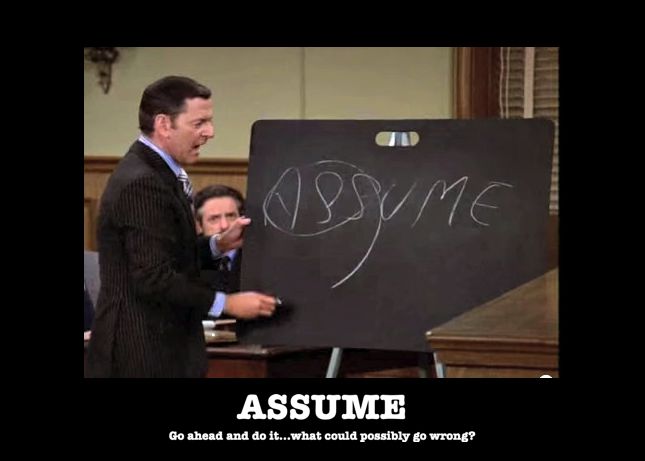
“Assume” – assumptions may just make an ‘ass’ out of ‘u’ and ‘me’
Now onto a more personal note.
In early to mid-2012 I created a business plan for an off-shoot brand called ‘Simply Marmalade’. My plan was NOT to replace Marmalade Photography’s custom offerings – that business model was thriving and would continue…Simply Marmalade would serve a different market entirely.
No. My plan for Simply Marmalade (SM) was to attract the more value minded clientele and offer a less custom option for photography services. I had already drawn up a business plan drawn up with the intent to hire associate photographers and leverage my Marmalade brand. My idea was to funnel the “less ideal” clients, the ones who didn’t quite fit into the custom photography mindset from Marmalade into Simply Marmalade as I was referring quite a few inquiries out to various photographers in my area.
The goal of SM: to offer photography services in a more volume-minded way and maybe at some point those same clients would become interested in the usual Marmalade Photography offerings.
The very afternoon after my dad’s passing I received the following email through my contact page into my Simply Marmalade inbox; I know this (very likely) had to be a fellow-photographer because I’m not even sure that the search-bots had even had an opportunity to crawl the SM site…I know I shared the existence of this site in, what I believed to be a (safe) private setting and maybe it went through the grapevine…maybe it was someone I knew…I’ll never know (and ultimately actually don’t care but am including it to showcase the danger of assumptions here for illustrative purposes).
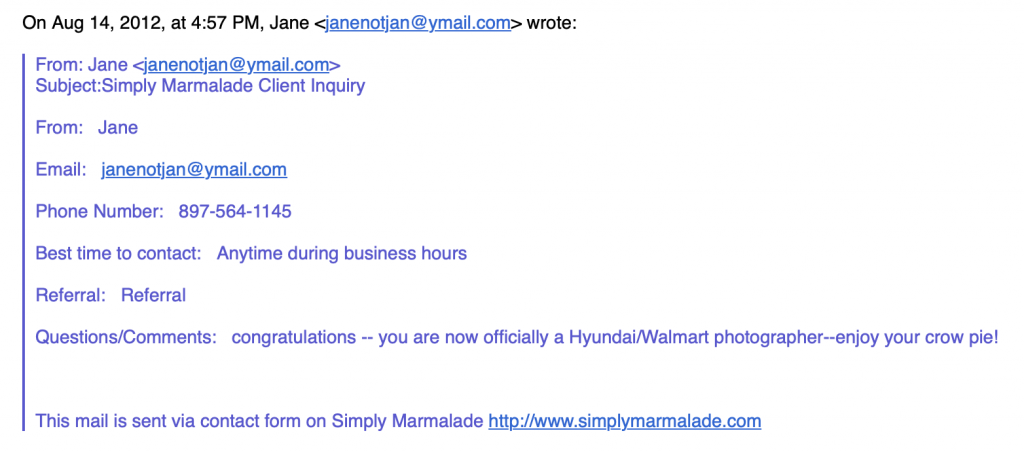
Enjoying My Crow Pie?
For sure even if this person “knew” me I wonder if they really ever thought about me as a thinking, breathing, living human experiencing life just as they were, I had just overcome some of my own perceived hurdles. It’s clear whoever this person was/is, they:
- Didn’t *really* know me
- Didn’t know my business model for the new business (hence a different name with different branding)
- Didn’t know my father had just died that morning – I HOPE they didn’t because if they did and still chose to send that email…well Karma does what it does, I don’t wish it upon anyone but it inevitably does its’ thing
- Didn’t have a clue about any future, had no idea that I’d never actually pursue that model because my mother would need me and I wouldn’t have the emotional capacity to dive into any new model of anything – in fact my business coasted for a number of years because soon (within 10 months) I’d lose my mom too (I’d already lost her to dementia and it worsened after my dad’s passing) and then would have to take care of a myriad of personal issues in the coming years…
What that anonymous ‘Jane Not Jan’ thought she knew – they ASS-UMED they knew my mistake and they were making sure I’d eat that crow pie. And they took time out of their day to make sure I knew it too. Maybe even giggled about it with some “friends”.
Why?
Because my business model (Marmalade or Simply Marmalade) threatened their beliefs about how photography “should” be done. Or maybe they thought I was turning in the towel on Marmalade and made an assumption about what I would be moving forward with in the future. Maybe they thought Marmalade ran its’ course and I was opting for the “better” business model that they engaged in.
Or, maybe, they pondered: If volume photography could be successful AND ethical, what did that mean for their boutique-only philosophy? If an (eventual) associate photographer(s) could do good work, did that diminish their value as solo artist?
It’s clear to me, especially now, well over a decade later, this person was operating from a place of scarcity. Lack mindset. Scare-city (those who dwell in the scary-city!!)
And scarcity? I’ve seen it make normally good people – VICIOUS, cruel or at the very least: unkind and unempathetic. I had moments like that myself through the years (it wouldn’t be growth if I didn’t admit that at some point, not my finest hours for sure) but the point is recognition and growth toward something better mindset-wise.
The truth is, every once in awhile, less frequently in the past decade – but yes, once in awhile, I do think about this email. Not because I feel the criticism was valid (it wasn’t) but because of the TIMING of that email (and other strange circumstances I won’t get into here).
…Twelve hours into the worst day of my life, someone wanted to make sure I felt worse about my business choices.
Not because this “JaneNotJan” person is/was evil.
Because they, themselves, were (probably) scared…
…maybe scared that someone doing it differently might invalidate their choices, or already had and now they feel vindicated…
…maybe scared that there might be more than one “right” way to run a photography business…
…maybe scared that if I succeeded with a model they disapproved of, their beliefs about the industry might be wrong…
…or maybe they viewed my pivot to another model as re-affirmation about their own beliefs about custom photography. My operating Marmalade from a custom viewpoint was a threat. My creating this PCP website – my literally advocating FOR elevated industry standards – was viewed as ‘high and mighty’ or ‘holier than thou.’ And this was their opportunity. The chance to humble me. To tell me to “eat crow.” Because they see this off-shoot of my brand as my lowering my standards to meet their level of business which they maybe advocated for because they couldn’t see how what I had been doing had been successful…maybe, who knows? And really who cares.
They were coming from a scarcity mindset where “scare” is literally part of the word.
Envy and fear make people cruel. Creating their own assumptions as they thought they “connected-the-dots”. What a shame for them! Instead of reaching out to SM with an inquiry: “Hey fellow photographer here, why are you abandoning your custom photography business model?” with a real email and phone number so we could chat they chose to hide behind anonymity and tell a fellow professional to “eat crow pie”.
(which I never would, I like crows!)
Here’s what I know now, thirteen+ years later, with this lesson firmly behind me and my own eye on the future:
As a business owner you may be attacked from BOTH directions.
– Budget photographers will call you elitist for premium pricing.
– Budget clients will call you “high and mighty” for premium pricing.
– Premium photographers will call you Walmart for offering accessible options or exploring volume models.
– Target market clients for premium photographers will view your offerings as beneath them.
– Volume photographers will call you pretentious for boutique positioning.
– Volume type clients will call you pretentious for boutique positioning.
– Boutique photographers will call you a sellout for considering other approaches.
…you get the drill…
No matter what you do, I can guarantee you, someone will tell you you’re doing it wrong.
And they’ll do it while having NO IDEA what’s actually happening in your life. Or how to properly run a business. Or from a place of envy. Or from a place of one-uppery. Or…really the list is endless. The truth is they will not care about your perspective because they are mired in their own scarcity mindset.
The lesson isn’t “don’t try different business models.”
⟶ The lesson actually is: Other photographers’ opinions about your business say everything about THEIR insecurities and nothing about your value. In fact OTHERS OPINIONS OF WHATEVER YOU ARE DOING SPEAKS MORE ABOUT THEM…THAN YOU. This isn’t just about photography.
…Also, I hope this expands to the greater lesson: Be kind. You never know what someone is going through.
(Clarification: Opinions and facts are different. Business math – like whether you’re making -$5/hour or $55/hour – isn’t opinion. It’s math. Don’t use ‘it’s just your opinion’ to dismiss provable numbers after taking free resources from this site.)
I know for a fact that it is very unlikely that the person who sent that email had no idea I was twelve hours into grief. They had no idea that business model would never launch because I would be mired up to my ears for years in personal matters that took up any time that I could’ve devoted to launching a new business, time to manage behind-the-scenes as a new business grew.
They had no idea their “crow pie” prediction would never have a chance to be proven wrong – because the chaos of life intervened and I literally gave up the illusion of control and flowed with where life had to take me to finish out and close chapters of my life WHILE grieving the loss of both my parents who I looked up to and cared for for the majority of my life.
Then I grappled with being on the cusp of a divorce for a number of years because of tumultuous life changes then had to deal with daughters growing up from pre-teenhood to tweenhood to teenage years and then the early 20’s. I was overwhelmed, over-stressed, and adding another business that needed care like a newborn was just ONE MORE THING that I would not be able to balance in a time when I was in pure survival mode.
But I remember. But I’m not mad. I remember because of the lesson it taught me: try to be gentle with others when giving advice or commentary – you have no idea what they’re going through. I remember because of the timing of that email. I remember because the Universe (God, whatever you call it) had a message for me and it was an important one to head’s up to. Not everyone you have affection for feels the same. Not everyone you trust is trustworthy. And no matter what others say or do: it is all up to you.
It is all up to you!
Section 2: The Scarcity Mindset Trap

Back to that photographer who wanted to leave the group because someone else’s success made her feel inferior. THAT is scarcity thinking.
WebMD defines a scarcity mindset as: ‘…a way of thinking that focuses on something you don’t have enough of.‘
And while it’s sort of buzzy (buzz wordy? buzzy sounds better…) “Scarcity Mindset” as a concept isn’t new. “Not enough” thinking has been part of human experience for as long as there has been someone with “more”. More wealth, more poverty, and more stuff.
Modernity has also failed us in this aspect as scarcity thinking plays in social media networks, in lifestyle web articles, with TikTok and Instagram “Influencers”. Even before those things it has made a lot of money for ad revenues – commercials showcasing narratives that “you can have it all”, and on and on.
It often looks and feels like the costume we put on when we are “keeping up with the Joneses”. This costume we wear that has people wasting resources and energy to be a certain way.

OG Influencer
The Martha Stewart-ization of it all.
Disclaimer: I’m a Martha Stan, no hate to me for saying it but you’ll get what I’m trying to say when I say it!
Decades before Instagram influencers, before Pinterest perfect, before “that girl” morning routines – there was ✨Martha✨. You know…the OG Influencer…
She who showed us we could (maybe we should!) hand-make our own wrapping paper, grow our own herbs, and fold our napkins into swans…that same Martha.
Martha didn’t really invent comparison culture, but she certainly refined it into an art form. Probably unwittingly so! Her entire empire was built on aspiration – showing us a vision of perfection that was just attainable enough to keep us trying, but just out of reach enough to keep us buying. The perfect Thanksgiving table. The immaculate garden. The flawlessly decorated home. All achievable…if you just tried harder, had some staff, had more resources, spent more, did more.
Gah. I love her!
And I/we ate it up. I/we still do. She is the OG. So ICONIC. Walked out of that prison with the hand crocheted cape she made while locked up behind bars. Didn’t rat on anyone. Was made an example of by the forces that be…and it, well it just humanized her I think. Made her perfection MORE relatable. Helped elevate her brand in a more accessible way, I believe.
Anyway, as a Martha Stan, I could go on and on because I love her, the brand. The whole shebang! The truth of the Influencer problem isn’t Martha herself…the problem is what her success taught an entire generation of marketers and content creators:
SCARCITY (and comparison, that old thief of joy) SELLS.
That making people feel like they don’t have enough, aren’t enough, can’t do enough – that’s the marketing formula.
Step 1: Create the aspiration.
Step 2: Show the gap between where they are and where they “should” be.
Step 3: Then sell them the solution.
Social media just weaponized what Martha pioneered. And that weaponization crossed all sorts of genres – from being a Pinterest mom to photography to probably all sorts of other fields. And now instead of comparing ourselves to one carefully curated lifestyle expert, we’re comparing ourselves to thousands. Every photographer’s highlight reel. Every styled shoot. Every $20K weekend. Every “I just hit six figures” post. It all erodes our sense of – well – groundedness. Us-ness. Self-esteem.
You see? Scarcity mindset thrives in comparison culture. It feeds on it. Because when you’re constantly measuring yourself against everyone else’s carefully curated success, you’ll always find yourself lacking. Comparison, that ole thief of joy.
I personally believe that’s the Martha Stewart-ization of modern business: the costume we wear trying to “keep up with the Joneses” (or the Stewarts, or the Instagram photographers with perfect feeds and perfect sales). We waste resources and energy trying to be a certain way instead of building something sustainable from our actual strengths.
Again I LOVE Martha Stewart and many have talked about this comparison culture way back when MS Living was in its’ prime. This isn’t a new discussion just updated for the social media age.
Yes she wears the crown as the OG Influencer, but now you literally have the thousands I mentioned before. And well? It’s exhausting. And pointless. And is so de-motivating to be constantly confronted with.
So that scarcity mindset doesn’t just apply to material things – it could be a perception of status, of getting MORE done. The perceived lack of support. The actual lack of experience, lack of felt confidence. Essentially when you operate from a place of scarcity, you believe there is just not enough. You tunnel vision into what you’re LACKING rather than recognizing the abundance and resources already in front of you.
You become so fixated on what you DON’T HAVE that you neglect what you DO have. The Marthas of the world just gave your the yardstick to measure yourself by.
(and damn, I really do love Martha Stewart, truly. My Polish princess…)
Scarcity mindset will affect your business, your processes and your bottom line – stop undervaluing your photography
You can easily see how this type of thinking could become an issue when working to run a sustainable business. What we know about this kind of thinking when running a business: the photographer with scarcity thought processes may believe that their glass is always half empty. That one or more of the following are absolutes when dealing with their business:
- There aren’t enough clients to go around
- If another photographer is booking high-paying clients, that means there are fewer for me
- The market can only support X number of premium photographers
- I need to compete on PRICE because (choose one): my market won’t support it, I’m not experienced enough, I haven’t been in business long enough………etc. etc.
The Jeff Lubin story I mentioned above, is a great example of photographers limiting their own sales because of their mindset. Those clients didn’t come in with the greatest finery and all the jewels. They came in wearing denim, simple clothing.
The lesson? Stop trying to guess who has money and who will spend it. I promise that you’ll be wrong more often than you’re right. It is an aspect to scarcity mindset because you’re projecting your own concepts of lack onto others.
And worse – you rob your clients of the full experience because you decided FOR them what they could afford.
The truth is? Some of my highest sales have been from clients who:
- shop for bargains
- drive more “basic” vehicles (think Toyota and Honda and not Maserati or Bentley)
- live in modest homes
- don’t live in the “right” zipcode
The truth? Some of my smaller sales during my 20+ year career have been with clients who:
- have homes filled with high-end art (think original Warhols and original Rembrandts)
- sport Fendi, Gucci, Louis Vuitton (you name it) handbags
- live in luxurious high rise homes with extraordinary views or in posh suburbs that are traditionally associated with $$$$$$$$
- drive Maseratis, BMWs and Porsches
- definitely live in the “right” zipcode
But scarcity mindset isn’t just limiting – it’s actively harmful. Not just to your business, but to your brain function and your capacity for empathy to yourself and to others.
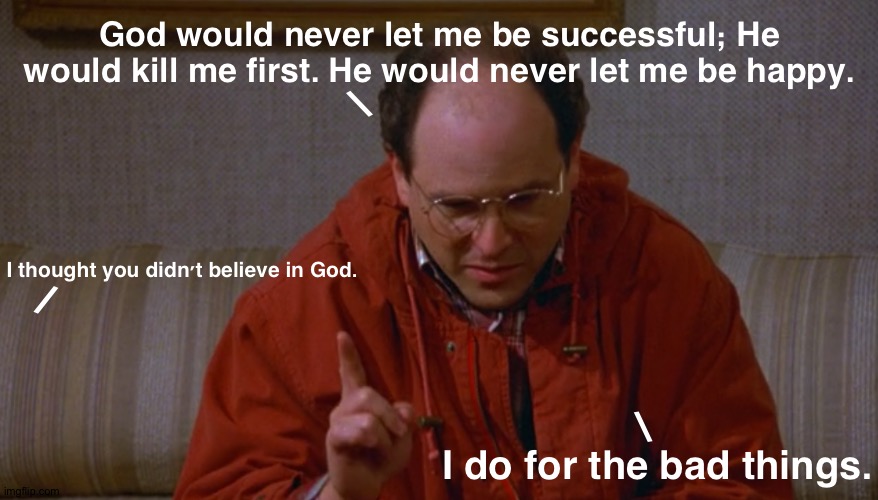
The Dangers Of Scarcity Thought Processes
Scarcity thinking is not only dangerous to others because of perceptions of lack and “privilege”. It can affect your intellectual performance, your cognitive performance and time management skills/ability and your levels of empathetic thinking toward other people.
This article on WebMD states that scarcity mindset makes people’s IQs drop up to 14 points: “In an experiment, researchers found that people who were preoccupied with scarcity scored 13 to 14 points lower than those who weren’t. It might not seem like much, but 13 or 14 points is the difference between outstanding and average.”
Think about that: a scarcity mindset literally makes you dumber. You very likely aren’t capable of making good business decisions when your IQ is artificially suppressed by your own limiting beliefs.
Your cognitive performance is also at risk. Those with scarcity mindset thinking are jeopardizing their time management skillset (again, WebMD): “One study put people in a situation of time scarcity and found that they were less likely to notice time-saving cues and more likely to forget instructions.”
And here’s the connection to that email I received twelve hours after my father died from that lovely JaneNotJan:
People with scarcity mindset have demonstrably reduced empathy.
‘It (scarcity mindset) reduces the ability to empathize. When you’re obsessing over one thing, it’s hard to pay attention to what else is going on, including what’s going on with other people. One study found that a scarcity mindset limited people’s ability to empathize with others’ pain.’
That ‘Jane Not Jan’ person may not have been just cruel by choice. A scarcity mindset literally impaired their capacity to consider what I might be going through. Their obsession with ‘correct’ business models made them unable to see me as a human being facing unimaginable grief, even if she didn’t know it. They may not have had the capacity to believe the author of Professional Child Photographer and owner of Marmalade Photography could possibly be going through actual, like, human stuff…weird, right?
(underlined links to quoted references )
The Opposite of scarcity is abundance

On the other hand abundance thinking will help you understand:
- High-value clients exist in EVERY market (look at the first example of the dirty farmer walking into that downtown studio)
- Clients choose photographers for REASONS beyond price (they choose photographers that will relate to them, understand them, see their families for who they are)
- There’s room for multiple premium photographers (absolutely and it indicates a healthy vibrant marketplace where there is choice and selection!)
- Another photographer’s success doesn’t limit mine (your competitors are not your enemies, I know many local groups in various cities where the photographers have found a way to be supportive and kind to each other)
On that last point:
Scarcity mindset contributes to competitive thinking because you may believe that there are only a limited number of resources rather than viewing things from an abundance perspective. Your competitors are not your enemies. I know photographers in markets across the country who’ve built supportive communities – referring clients to each other when they’re booked, celebrating each other’s wins, sharing knowledge freely, getting together with great regularity, covering each other in moments of need (like the friend who needed a battery, we used to shoot the same camera and I wasn’t too far from her location and I dropped my spare off for her – saving her butt in a time of need like she had done for me a time or two prior to that!)
That’s abundance thinking. And ironically, those photographers tend to be the most successful.
Section 3: What Success Stories Actually Prove
When you see a photographer who shares their impressive numbers, work hard to keep that green eyed monster at bay: don’t just see the RESULT. Look at the STRATEGY involved:
Speaking to the Holly-Days special event the photographer who grossed $20k in three days of “mini sessions” let’s break this down (without knowing the details of knowing how they did it but knowing the formula on how they got there):
• Availability LIMITED to 14 spots total to only several specified dates
• A special LIMITED set that felt elegant and grand only for this Holly-Days event
• Likely a lower cost of entry, providing some alluring product to get people to book
• A studio filled with products for the clients to ooooh, ahhhh and touch and feel
• The studio likely felt homey and warm and probably smelled good that day
• The sales process probably included samples strewn about the room – maybe even duplicates of what was seen pre-session. Beautifully crafted albums, large framed and mounted fine art prints, gorgeous canvases, modern and sleek metal prints – all displayed with intent to impress
• These things already drew the greater number of repeat clients in because this photographer has already demonstrated a commitment to service and provision of high quality end products in addition to quality photography
• Great sales room strategies
None of these things are secrets nor are they some sort of magic only available to certain photographers. These are business strategies anyone can implement.
But first they must believe in their own self-value. They must believe their work is worth it.
So…what now?
That photographer who grossed $20K in three days? She’s not special. She’s not luckier than you. She doesn’t have a secret market full of wealthy clients that you don’t have access to.
She just believes her work is worth premium investment—and structured her business accordingly.
You can do the same.
If you believe you’re worth it.
The question isn’t: “Why can SHE charge that and I can’t?”
The question is: “What beliefs do I need to examine about my own value?”
Other photographers’ success doesn’t limit yours. Their big numbers don’t mean there’s less available for you. Their confidence doesn’t diminish your potential. The only thing standing between you and sustainable pricing is your own scarcity mindset.
So I encourage you, for the betterment of your business…and the industry…CHOOSE DIFFERENTLY.
Choose abundance over scarcity.
Choose strategy over fear.
Choose self-value over self-doubt.
The photography industry doesn’t need any more $300 (or, gasp, less!) full sessions and burned-out photographers racing to the bottom.
Stop Underpricing: Believe You’re Worth It
It needs YOU – charging what you’re worth, serving clients exceptionally, and building a business that actually sustains you and your family.
If you’re curious about where you may be on the scarcity → abundance spectrum? Take our quiz!
We’ve just discussed how a scarcity mindset will literally lower your IQ and reduce your level of empathy toward others. We’ve touched upon the bounty of abundance thinking. And we’ve mourned the beliefs that keep photographers stuck in inferior feelings and race-to-bottom pricing.
Now it’s time to find out (drumroll please) What is YOUR photographer mindset?
Take this quick assessment below (12 questions, ~3 minutes) to discover where you are – and how to proceed!
What’s Your Photographer Mindset?
Discover where you are on the Scarcity → Abundance spectrum
Scarcity mindset…abundance thinker…or somewhere in-between?
Now it’s time to find out: What’s YOUR photographer mindset?
Take this quick 12 question quiz to discover what mindset you possess & what to do next.
Explore Professional Photographer Resources:
• The Photographer’s Hourly Rate Calculator – Online calculator asking the question: “Are you making money, honey?”
• The Business Reality Check Quiz – Assess where your business stands today
• The Hard Realities of Running a Photography Business – Comprehensive guidance
• Time Cost Checklist [this is a pdf download] – Track your actual session hours
• Photographer Self-Evaluation– See if you’re directory-ready
• Why You Should Offer Custom Photography – The case for a custom photography business model with premium pricing
Found this helpful?
Congrats! You made it to the end of this lengthy article filled with advice do’s/don’ts and maybes. If you have someone or some people to share this with…you’re welcome to use any portion of this site on your blog, website, or social media pages with one caveat!
Please credit any excerpts you use on your site or blog by copying and pasting the following on your site or social media page (with appropriate links enabled):
” This article was written by Marianne Drenthe of Marmalade Photography www.marmaladephotography.com and can be found at the Professional Child Photography site at www.professionalchildphotographer.com “